8 Ways to Embrace Your Next Milestone Birthday

Know that you won’t always feel this way

Dreading your upcoming milestone birthday? Take comfort in knowing that this fear of feeling old, worn-out or past your prime won’t last. In fact, according to recent research, it’s very common for self-esteem to increase with age. That’s not entirely surprising when you consider that every year, you develop a greater understanding of the world around you—as well as yourself.

Focus on what you can do, rather than what you can’t

Dwelling on the things that age has taken away from you can take you down a very dark and unhappy path. Ultimately, you’ll begin to question your achievements, as well as doubt your ability to achieve anything greater in the years ahead. It’s important to remember that you had limitations in your youth, just as you have limitations now. You’ll stand a better chance of reaching your goals if you focus on making use of your abilities, rather than demonizing your disabilities.

Don’t play the numbers game

Practice describing yourself without including your age. You are so much more than a number, and defining yourself by your achievements, skills and most fulfilling relationships can contribute to a much healthier self-image.

Rethink your milestone birthday party

Sometimes what we’re actually dreading most about a milestone birthday isn’t the prospect of getting older—it’s the party. If you’re deeply uncomfortable about a big bash in your honour, take the reins and plan your own birthday party alternative. Instead of a grand cake-and-candles affair, consider devoting your birthday to one-on-one time with the people who are important to you. If any lesson is learned with the passing of the years, it’s how valuable your time is. Invest yours in a productive and meaningful way by scheduling tea with a mentor, or someone who looks to you as a mentor. Set up a Skype date with a far-flung family member who you’ve been meaning to catch up with. Nothing cultivates gratitude like a reminder of how much you love—and are loved in return.

Rethink your milestone birthday gifts

If your friends and family do insist on a party, request a donation to a charity of your choice in lieu of gifts. “Donating your birthday” as it’s become known, is an increasingly popular option—and it’s ultimately much more meaningful than another knick-knack that’s destined to collect dust on the mantel. We are a value-driven species, and a charity that represents your values can drive lasting change—a legacy, even—beyond what you might achieve as an individual.

Use your birthday to kick-off a new project

Sure, the “young blood” might bring an unbridled energy and enthusiasm to the table, but the older we get, the better we are at channeling those innovative powers in an effective way. Take Colonel Sanders, for example. The founder of KFC didn’t get around to building his fast food empire until he was in his late 60s (and recovering from a bout of depression, to boot). He’s one of many who tapped his accumulated knowledge and wisdom to kick-off a new endeavour at an age that cynics might consider “past his prime.”

Pass something on

Instead of making cash donations to a charity, how about giving the gift of your time and expertise? Your experiences through the years have led you to master at least one skill set (be it personal or professional), and your birthday is a fantastic opportunity to pass on those skills as a mentor. Think back to how much you owe that generous colleague or teacher who coached you as you were setting out on your career path, and make the effort to pay it forward. Not only are you helping out the next generation, you’re also likely to find the experience deeply rewarding on a personal level.

Embrace the anxiety

Don’t think yourself foolish or wrong in feeling anxious about your upcoming milestone birthday. This anxiety is perfectly natural. One of the best ways to deal with this anxiety is to first acknowledge it, and then journal your thoughts in response. Documenting your feelings by putting pen to paper is a valuable practice that allows you to see the structure of your thoughts and ultimately change your way of thinking. That’s essential if you want to shift your perspective on aging, and start thinking of getting older as a blessing rather than a curse.


What Not to Say When Someone Comes Out as LGBTQ+ (And What to Say Instead)

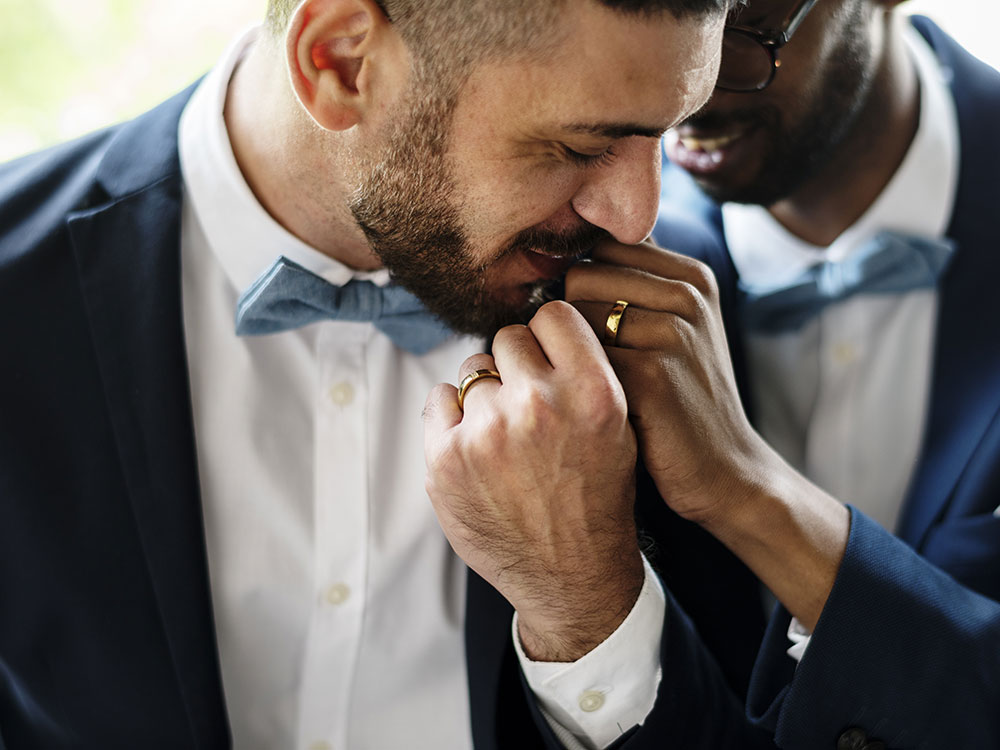
When a loved one takes the brave step to come out to you as an LGBTQ+ individual, the way you respond, and the way in which it’s interpreted, can have lasting effects. Relationship and wellness counsellor Deepak Kashyap reveals the seven things you should never say to someone who comes out of the closet—and what you should say instead.

“Are you sure?”

People who identify as LGBTQ+ often struggle a great deal with their own feelings before they make the nerve-wracking decision to come out. Despite your best intentions, responding to this by asking, “Are you sure?” may be seen as calling into question the emotional journey that brought them to that point. Instead of expressing what might be interpreted as doubt, you could perhaps say, “It’s always good to know what you like and want. Thanks for coming out to me.”

“It must have been tough for your folks.”

Yes, it could have been tough for the parents. But guess what? It was harder on the individual for even longer—and in more intense ways than you can imagine. Staying in the closet is not a very comfortable position for a self-accepting person, but it’s an even harder journey to get to that point of self-acceptance. LGBTQ+ individuals have battled real fears of being attacked, abandoned, discriminated against and disadvantaged. In fact, LGBTQ+ youth are three times more likely to commit suicide than their heterosexual counterparts. Although it’s reasonable to show empathy for their parents, it’s poorly-timed here. Instead, try, “I hope you are coping well with your parents’ response. I am here to talk if you need to. Thanks for coming out me.”

“Why didn’t you tell me before?”

Well, it’s likely because they were afraid. It’s not because you are a monster, but because they love you and feared losing you as a result of coming out. The important thing is to not take it personally. When a loved one comes out, you are being called on to show targeted and urgent empathy. While your pain of being “left out” is real, it can wait a day or two. Right now, your focus should be how to celebrate your loved one’s life and the choices that he or she has made, including the one of having just come out to you. Kick off the celebration by saying, “I am so proud that you have chosen to live your truth in front of me. Thanks for being authentic with me.”

“Are you the man or the woman in the relationship?”

More than anything, this question demonstrates a fundamental ignorance of the concept of same-sex love. It also misplaces the focus on the sexual act (rather than on his or her identity) at a time when that person is in a vulnerable state. When a person comes out, they’re opening their hearts to you and sharing the emotional reality of who they are as individuals. Instead of asking this question, reinforce how grateful you are that the person has had the courage to come out to you, and say, “I accept you for who you are. Thank you for coming out to me.”

“Would you be my gay bestie?”

Lesbians, gays and bisexuals can be good (or insufferable) company just like any other human being, but the point is, they are human beings and not objects or accessories as the pop culture depiction of the “gay bestie” might have you believe. Instead of this response, take this opportunity to reaffirm your loving, supportive relationship: “You are brave and honest, and this makes me respect you even more. Thanks for coming out to me.”

“I knew it!”

This particularly hurtful response is generally remarked when a “feminine” man or “butch” woman comes out. Many gender non-conforming individuals try very hard to either tone-down or manage their sexuality in public for fear of homophobia. By saying “I knew it!,” you’re inadvertently suggesting that their sexuality or gender non-conformity was being gossiped about behind their back in a sneaky, judgmental manner, which could, in turn, lead the person to feel that staying in the closet was a safer option than coming out. To avoid this situation, stick with a response of, “I’m honoured you chose to come out to me. Thank you.”

“But you’re so masculine!”

On the opposite end of the spectrum lies this response, indicating disbelief that a “manly” man could be gay, or that a “feminine” woman could be lesbian. Being in the closet is an alienating experience; responding to an individual’s coming-out with a comment that suggests they don’t conform to their “new” sexual identity either can be just as alienating. A better response could be, simply, “I didn’t know, but I’m so grateful you came out to me. Thank you.”

9 Mindful Shopping Tips That Can Save You Money (And Make You Happier!)

Yes, mindful shopping is a thing

“Mindfulness” is a big buzzword these days. Referring to the practice of consciously observing your body and breath without judgments, mindfulness has gained ground in our culture as a coping mechanism; a way to deal with our feelings. Part of the appeal of mindfulness is that it’s a technique that can be applied to just about any aspect of life. You’ve no doubt heard of mindful eating, and perhaps even mindful moving. Now, mindful shopping is gaining ground in response to our seemingly innate tendency towards impulsive (and compulsive!) shopping.

It has always been easier to spend money than to earn it, but it turns out there’s an even bigger problem now that we don’t tend to see or touch real cash. Dr. Dimitrios Tsivrikos of University College London, has shown in his research that the brain experiences more discomfort spending cash money as opposed to digital money. In other words, it’s easier to spend recklessly in an economy dominated by credit card transactions.

These mindless shopping habits can have serious repercussions on our daily lives, including buyer’s remorse, skewed financial priorities and increased levels of anxiety and unhappiness. Ultimately, it can lead to unnecessary debt, put a strain on relationships and even contribute to hoarding tendencies. (Don’t miss these tips for getting out of credit card debt.)

Mindful shopping addresses the emotions at the root of reckless spending, and can serve as a means of regaining control of your bank account balance—and your emotional well-being. Here are eight ways to put mindful shopping into practice.

Savour each sensation—then let them go

The moment you step into a shop, your body’s five senses contribute to an overall feeling—positive or negative—about the merchandise you’re interacting with. How does it feel when you touch it? How does it look? What does it smell like? When those sensations are pleasurable, it can trigger a feeling of euphoria—and a strong compulsion to buy the product, whether or not it’s necessary or even in your budget. The key to not getting swept up in that euphoria is to take a moment to consciously observe those body sensations as merely that: body sensations. When you come across that perfect pair of jeans, for instance, those physical sensations might include a slight increase in your heartbeat, a sharp intake of breath, or even a tingling at the back of your neck. The moment you consciously take note of these sensations—without wishing for them to get stronger or last longer—you are truly “present.” Awareness of the passing nature of these feelings is at the core of mindful shopping.

Make a mindful shopping list

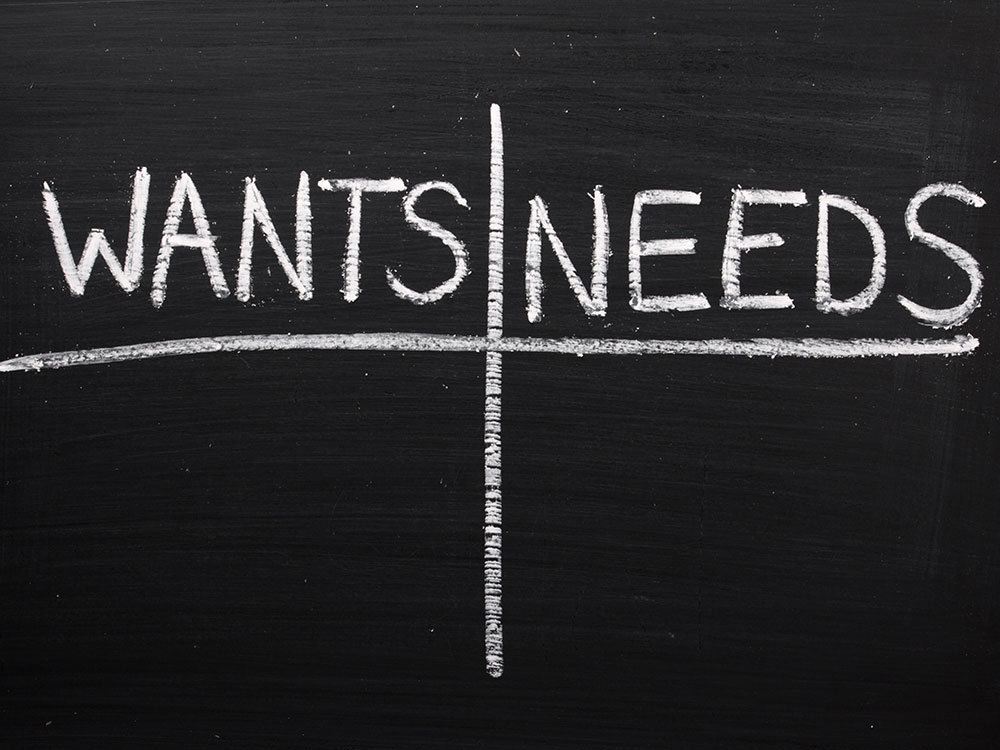
A mindful shopping list is one that serves to separate your daily expenses into “needs” and “wants” on an emotional level. A “need” fulfills an essential, practical purpose which may or may not be pleasurable, like buying groceries so that you can feed yourself and your family. A “want,” on the other hand, is largely driven by the pleasure sensation of owning or experiencing a product, whether it’s acquiring another Louis Vuitton bag or an autographed baseball.

Forego the fear of missing out

Fear of missing out—or “FOMO”—is rampant in our culture, thanks in part to the rise of social media. Our phones relay a constant feed of what others are buying and experiencing, inadvertently fueling our own insecurities about not having or doing enough, and missing out on bigger and better (and more!) things. This fear may manifest in lowered self-esteem, as well as heightened feelings of jealousy. Dr. Xun (Irene) Huang, of Nanyang Technological University in Singapore, ran five studies on consumer habits, and found that “feelings of jealousy do seem to increase the desire for someone to purchase.” By resisting the urge to compare yourself to others (you might even consider reducing your social media exposure with a “digital detox”), you reduce the risk of emotional shopping.

Separate who you are from what you own

In the past, a king was elevated to the title of emperor when he accumulated vast amounts of land and dominion over several countries. His possessions altered his identity. Although we like to think better of ourselves, the same holds true even today. The more things people possess, the greater their status, and the more likely we are to hold them in high esteem. We apply the same measure of worth to ourselves, defining who we are (and how good we are) by what we have. Problem is, there’s never a point at which we have enough to feel satisfied. (If we did, no billionaire would ever report feelings of unhappiness.) Separating “I am” from “I have” is key to mindful shopping.

Find other ways to “treat yourself”

We all need a pick-me-up now and again, and for many of us, the quickest fix for a miserable day is to treat yourself to something new. Unfortunately, the pleasure of an impulse purchase is fleeting, while the effect on your bank account lingers. Consider other ways to administer emotional first-aid when needed, whether it’s going for a walk with a close friend or hitting up the library to check out the latest from your favourite author.

Be cynical of “sales”

It’s one thing to stock up on discounted products that you need on a regular basis, but it’s quite another thing to leave a store with a bag full of “bargains” you’d never intended to buy in the first place. Be mindful that buying anything on sale is still spending—not saving.

Take a breath before you buy

Sales can also create a sense of urgency, as there’s often a deadline built into that bargain price tag. As a result, you’re more inclined to make a purchase on impulse. The next time you’re tempted by a discount, step outside the store and give yourself a 15-minute grace period to catch your breath. This opportunity for reflection on your financial priorities—and your mindful shopping list—is essential.

Window shopping withers your will power

It doesn’t take long for window-shopping to turn into real shopping. In fact, that’s what visual merchandising is specifically designed to do! Everything in a modern-day store—from the music to the lighting to the store layout—has been selected to make you more inclined to buy stuff. If you don’t intend on making a purchase, it’s better to avoid the temptation and forgo window shopping altogether.

Don’t substitute retail therapy for real therapy

Sometimes mindful shopping strategies aren’t enough to curb a serious shopping addiction. If you continue to find yourself obsessed with social status, unable to manage anxiety, and depend entirely on shopping for a sense of fulfilment, you could likely benefit from professional counselling. Chances are, there are underlying emotional issues at play that only real therapy can address.